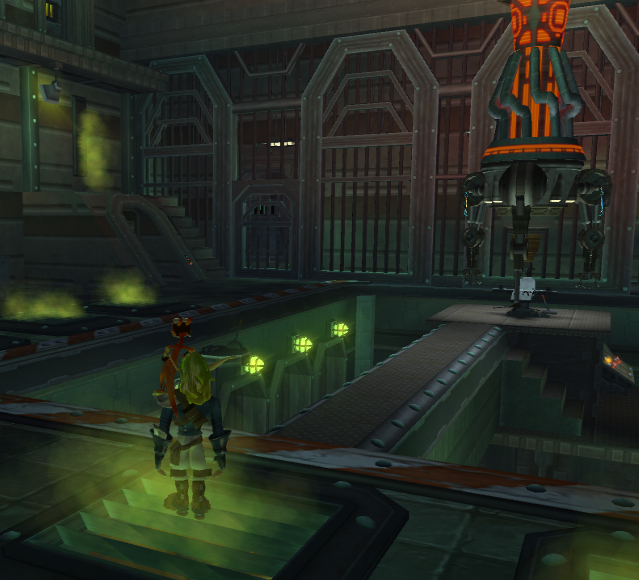
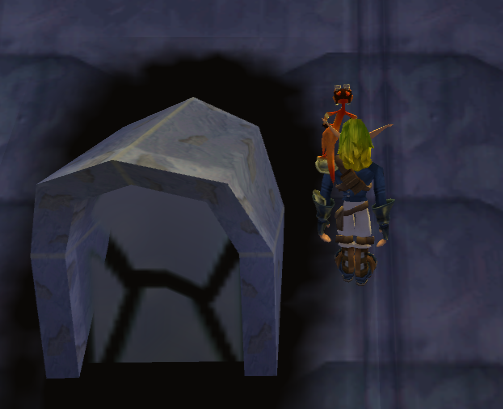
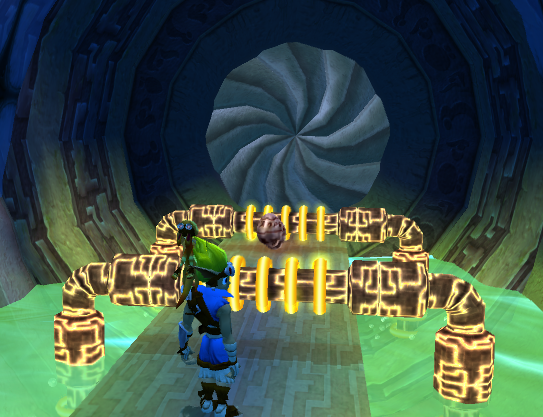
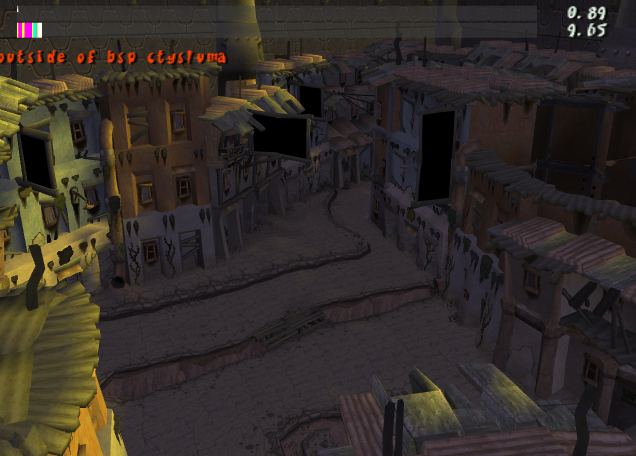
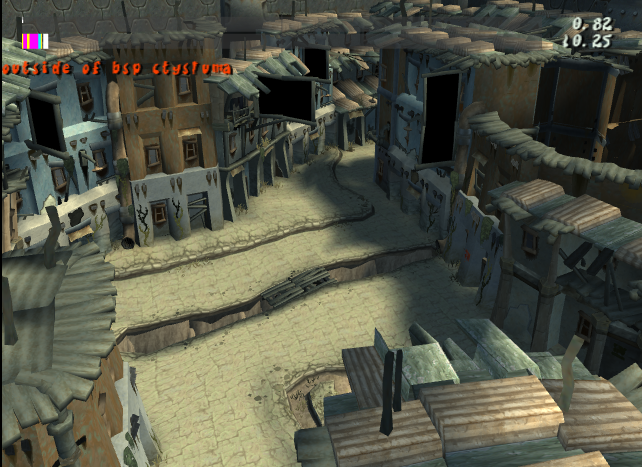
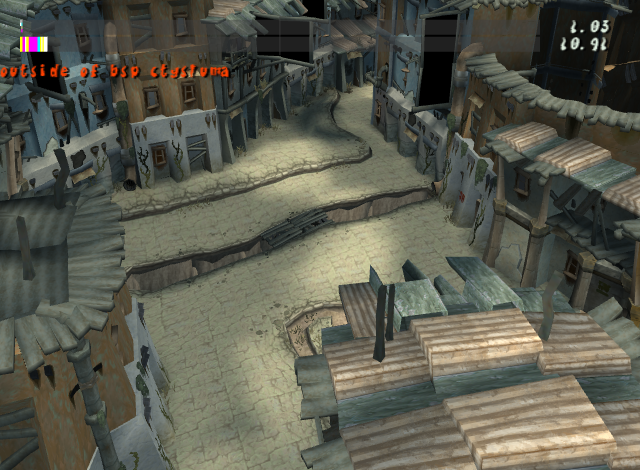
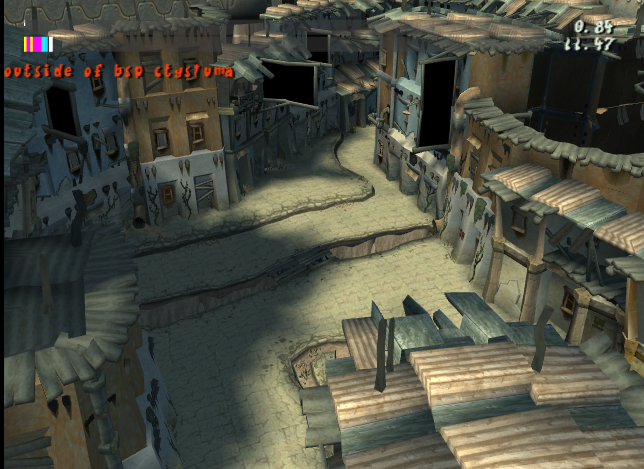
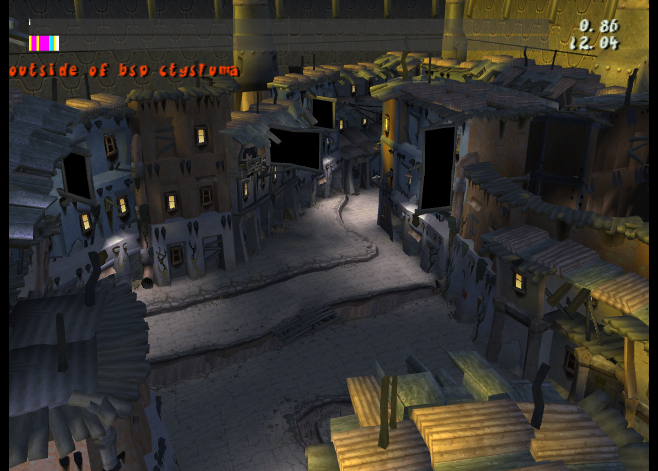
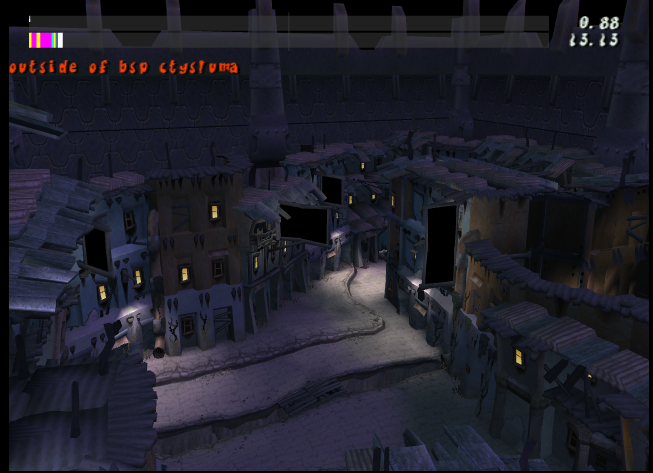
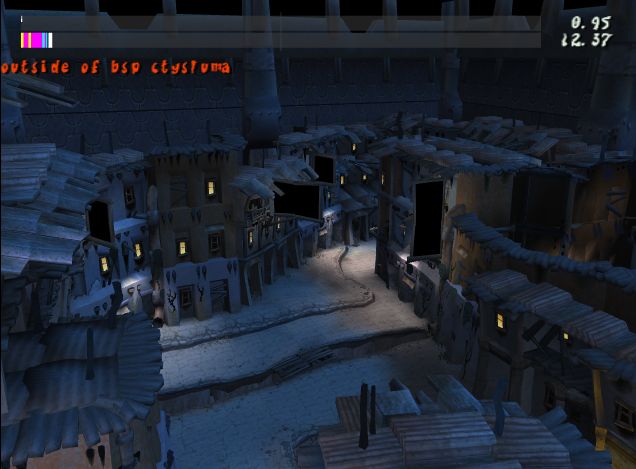
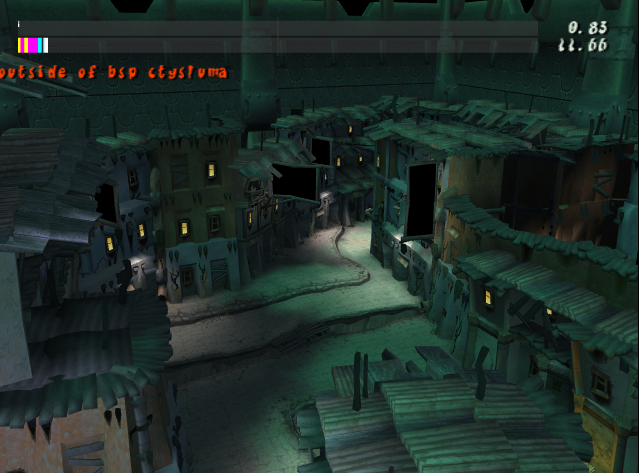
This adds hfrag, but with a few remaining issues:
- The textures aren't animated. Instead, it just uses one texture.
- The texture filtering isn't as good as at it could be.

I also cleaned up a few issues with the background renderers:
- Cleaned up some stuff that is common to hfrag, tie, tfrag, shrub
- Moved time-of-day color packing stuff to FR3 creation, rather than at
level load. This appears to reduce the frame time spikes when a level is
first drawn by about 5 or 6 ms in big levels.
- Cleaned up the x86 specific stuff used in time of day. Now there's
only one place where we have an `ifdef`, rather than spreading it all
over the rendering code.
This includes all the collision stuff needed to spawn `target`,
decompiles the sparticle code and adds some of the PC hacks needed for
merc to run (it doesn't work quite right and looks bad, likely due to a
combination of code copied from Jak 2 and the time of day hacks).

There are a bunch of temporary hacks (see commits) in place to prevent
the game from crashing quite as much, but it is still extremely prone to
doing so due to lots of missing functions/potentially bad decomp.

---------

Co-authored-by: water <awaterford111445@gmail.com>
The way we got/stored background matrices is a bit weird and full of
leftovers from the first attempts at porting renderers. This doesn't
work well with the Jak 2 "other camera" system where some stuff is
rendered with a different camera matrix.
This cleans most of it up. The exception is that the collide mesh
renderer and the additional sprite culling I added still need to peek at
some cached camera matrices.
This fixes the problem where etie uses the wrong matrices for "other
camera" levels. Now the "hole covers" go in the holes in the background
of the throne room.

Added framework to do texture animations entirely in C++. Currently only
works on relatively simple ones, and doesn't handle updating all
parameters - only the speeds.

Connected texture animations to merc and tfrag for skull gems, dark
bomb, and scrolling conveyors.

Cleaned up Tfragment/Tfrag3, which used to be two classes. This was one
of the first C++ renderers, so it had a weird design.
* tfrag3 data for merc2

* dma hooks for merc2

* start designing merc2 opengl, seems like the simple approach will be the best here

* before bone packing experiment

* fix up bones.gc

* use uniform buffer

* speedup, fix faces and eyes

* final fixes
* temp

* name the obvious ones

* un-pipelined the fast case in generic vu1

* generic2 dma

* pass2

* first pass at opengl

* many fixes

* fix hud, strip

* windows fix

* final tweaks

* memcard folder

* add missing include
 water111