 Tyler Wilding
53277a65ad
Tyler Wilding
53277a65ad
- Integrate the AST into the LSP, this makes parsing and tokenizing the files much easier - Consolidate most of the symbol info tracking in `goalc` to a single map. Fixed some issues where the old map would never evict symbols when re-compiling files. There is still some more to cleanup, but this now can be used as an incrementally updated source-of-truth for the LSP - re-compile files when they are saved. Ideally this would be done everytime they are changed but that: - may be too aggressive - goalc doesn't compile incrementally yet so it likely would be a worse UX Features added, see https://github.com/open-goal/opengoal-vscode/issues/256 - Hover 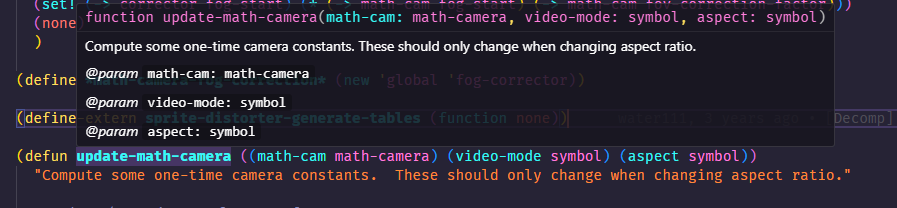  - LSP Status fixed - Type Hierarchy 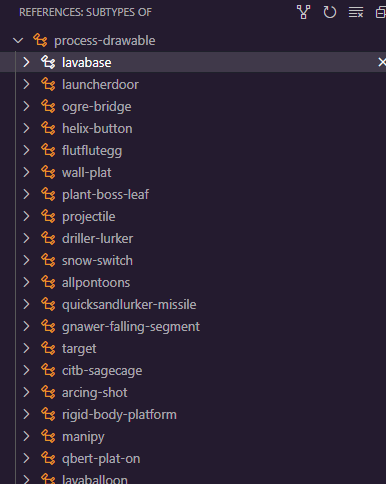 - Document Color 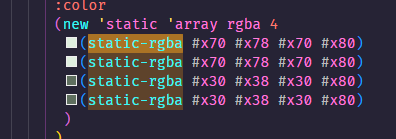 - Document Symbols  - Completions 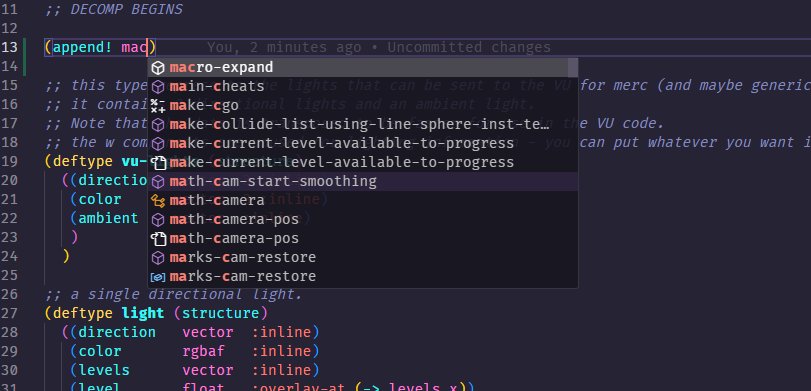 --------- Co-authored-by: Hat Kid <6624576+Hat-Kid@users.noreply.github.com>
Fuzzing tree-sitter
The tree-sitter fuzzing support requires 1) the libFuzzer runtime library and 2) a recent version of clang
libFuzzer
The main fuzzing logic is implemented by libFuzzer which is part of the compiler-rt project but is not shipped by distros. libFuzzer will need to be built from source, e.g.:
cd ~/src
git clone https://github.com/llvm-mirror/compiler-rt
cd compiler-rt/lib/fuzzer
./build.sh
clang
Using libFuzzer requires at least version 7 of clang and may not work with your system-installed version. If your system-installed version is too old, the easiest way to get started is to use the version provided by the Chromium team. Instructions are available at libFuzzer.info.
The fuzzers can then be built with:
export CLANG_DIR=$HOME/src/third_party/llvm-build/Release+Asserts/bin
CC="$CLANG_DIR/clang" CXX="$CLANG_DIR/clang++" LINK="$CLANG_DIR/clang++" \
  LIB_FUZZER_PATH=$HOME/src/compiler-rt/lib/fuzzer/libFuzzer.a \
  ./script/build-fuzzers
This will generate a separate fuzzer for each grammar defined in test/fixtures/grammars and will be instrumented with AddressSanitizer and UndefinedBehaviorSanitizer. Individual fuzzers can be built with, for example, ./script/build-fuzzers python ruby.
The run-fuzzer script handles running an individual fuzzer with a sensible default set of arguments:
./script/run-fuzzer <grammar-name> (halt|recover) <extra libFuzzer arguments...>
which will log information to stdout. Failing testcases and a fuzz corpus will be saved to fuzz-results/<grammar-name>. The most important extra libFuzzer options are -jobs and -workers which allow parallel fuzzing. This is can done with, e.g.:
./script/run-fuzzer <grammar-name> halt -jobs=32 -workers=32
The testcase can be used to reproduce the crash by running:
./script/reproduce <grammar-name> (halt|recover) <path-to-testcase>