Add support for the NXT6000-based digitv-box.  Add .get_tune_settings callback
for the NXT6000 to have a min_tune_delay of 500ms.

Signed-off-by: Svante Olofsson <svante@agentum.com>
Signed-off-by: Patrick Boettcher <pb@linuxtv.org>
Signed-off-by: Johannes Stezenbach <js@linuxtv.org>
Signed-off-by: Andrew Morton <akpm@osdl.org>
Signed-off-by: Linus Torvalds <torvalds@osdl.org>
Change the init call to optionally return the new dvb_usb_device directly.

Signed-off-by: Patrick Boettcher <pb@linuxtv.org>
Signed-off-by: Johannes Stezenbach <js@linuxtv.org>
Signed-off-by: Andrew Morton <akpm@osdl.org>
Signed-off-by: Linus Torvalds <torvalds@osdl.org>
Added names for clones of the DVB-T stick.
Whitespace cleanups.

Signed-off-by: Patrick Boettcher <pb@linuxtv.org>
Signed-off-by: Johannes Stezenbach <js@linuxtv.org>
Signed-off-by: Andrew Morton <akpm@osdl.org>
Signed-off-by: Linus Torvalds <torvalds@osdl.org>
Add USB IDs of the Kworld Xpert DVB-T USB2.0 (clone of the ADStech box).
Thanks to Marcus Hagn for testing.

Signed-off-by: Patrick Boettcher <pb@linuxtv.org>
Signed-off-by: Johannes Stezenbach <js@linuxtv.org>
Signed-off-by: Andrew Morton <akpm@osdl.org>
Signed-off-by: Linus Torvalds <torvalds@osdl.org>
Add driver for the TwinhanDTV StarBox and clones.

Thanks to Ralph Metzler for his initial work on this box and thanks to Twinhan
for their support.

Signed-off-by: Patrick Boettcher <pb@linuxtv.org>
Signed-off-by: Johannes Stezenbach <js@linuxtv.org>
Signed-off-by: Andrew Morton <akpm@osdl.org>
Signed-off-by: Linus Torvalds <torvalds@osdl.org>
This fix has also been applied to lgdt330x.  There is an optimization that
keeps track of the frequency tuned by the digital decoder.  The digital driver
does not set the frequency if it has not changed since it was tuned.  The
analog tuner driver knows nothing about the frequency saved by the digital
driver.  When the frequency is set using the video4linux code with tvtime, the
hardware get changed but the digital driver's state does not get updated.
Switch back to the same digital channel and the driver finds no change in
frequency so the tuner is not reset to the digital frequency.  The work around
is to remove the check and always set the tuner to the specified frequency.

Signed-off-by: Mac Michaels <wmichaels1@earthlink.net>
Signed-off-by: Michael Krufky <mkrufky@m1k.net>
Signed-off-by: Johannes Stezenbach <js@linuxtv.org>
Signed-off-by: Andrew Morton <akpm@osdl.org>
Signed-off-by: Linus Torvalds <torvalds@osdl.org>
while investigating the QAM_128-issue with the stv0297-driver for the
Cablestar (which is not the same as the one in dvb-kernel CVS, yet), I fixed
it, not by increasing the timeout, but by disabling the corner-detection for
QAM_128 and higher.

This patch has been tested on dvb-kernel cvs, and has been reported to work by
multiple users.  Some cards still need timeout increase on top of this patch.
This will be addressed later.

Signed-off-by: Patrick Boettcher <pb@linuxtv.org>
Signed-off-by: Michael Krufky <mkrufky@m1k.net>
Signed-off-by: Johannes Stezenbach <js@linuxtv.org>
Signed-off-by: Andrew Morton <akpm@osdl.org>
Signed-off-by: Linus Torvalds <torvalds@osdl.org>
Fix DiSEqC switching (one bug fix suggested by Peter Hettkamp, and one
experimentally determined msleep(30) suggested by Adam Szalkowski).

Signed-off-by: Johannes Stezenbach <js@linuxtv.org>
Signed-off-by: Andrew Morton <akpm@osdl.org>
Signed-off-by: Linus Torvalds <torvalds@osdl.org>
Reset acgconf register after tuning to improve locking, as suggested by Marco
Schluessler.  Minor cleanups in ves1820_init().

Signed-off-by: Johannes Stezenbach <js@linuxtv.org>
Signed-off-by: Andrew Morton <akpm@osdl.org>
Signed-off-by: Linus Torvalds <torvalds@osdl.org>
Pass a pointer to the i2c bus to the pll callbacks (stv0299 only).

It was not possible to tell which i2c bus should be used if an adapter has
multiple frontends on multiple i2c buses.

Signed-off-by: Andreas Oberritter <obi@linuxtv.org>
Signed-off-by: Johannes Stezenbach <js@linuxtv.org>
Signed-off-by: Andrew Morton <akpm@osdl.org>
Signed-off-by: Linus Torvalds <torvalds@osdl.org>
Fix two problems with the signal strength value in the mt352.c frontend:
1. the 4 most significant bits are zeroed - shift and mask wrong way round
2. need to align the 12 bits from the registers at the top of the 16 bit
   returned value - otherwise the range is not 0 to 0xffff its 0xf000 to 0xffff

Signed-off-by: Barry Scott <barry.scott@onelan.co.uk>
Signed-off-by: Johannes Stezenbach <js@linuxtv.org>
Signed-off-by: Andrew Morton <akpm@osdl.org>
Signed-off-by: Linus Torvalds <torvalds@osdl.org>
Patch from Dominique Dumont to get the SCM Red Viaccess CAM working with the
budget-ci.

Signed-off-by: Dominique Dumont <domi.dumont@free.fr>
Signed-off-by: Andrew de Quincey <adq_dvb@lidskialf.net>
Signed-off-by: Johannes Stezenbach <js@linuxtv.org>
Signed-off-by: Andrew Morton <akpm@osdl.org>
Signed-off-by: Linus Torvalds <torvalds@osdl.org>
Use INIT_LIST_HEAD for frontend_list.

Signed-off-by: Andreas Oberritter <obi@linuxtv.org>
Signed-off-by: Johannes Stezenbach <js@linuxtv.org>
Signed-off-by: Andrew Morton <akpm@osdl.org>
Signed-off-by: Linus Torvalds <torvalds@osdl.org>
Removed more unused variables and constants.

Signed-off-by: Andreas Oberritter <obi@linuxtv.org>
Signed-off-by: Johannes Stezenbach <js@linuxtv.org>
Signed-off-by: Andrew Morton <akpm@osdl.org>
Signed-off-by: Linus Torvalds <torvalds@osdl.org>
Removed some useless functions and variables.

Signed-off-by: Andreas Oberritter <obi@linuxtv.org>
Signed-off-by: Johannes Stezenbach <js@linuxtv.org>
Signed-off-by: Andrew Morton <akpm@osdl.org>
Signed-off-by: Linus Torvalds <torvalds@osdl.org>
Don't return immediately from dvb_dmx_swfilter_section_packet() if CC is not
ok.  Otherwise a new feed drops all packets until the first packet with CC=0
arrives.

Signed-off-by: Andreas Oberritter <obi@linuxtv.org>
Signed-off-by: Johannes Stezenbach <js@linuxtv.org>
Signed-off-by: Andrew Morton <akpm@osdl.org>
Signed-off-by: Linus Torvalds <torvalds@osdl.org>
Glue code for DMX_GET_CAPS and DMX_SET_SOURCE ioctls.

Signed-off-by: Andreas Oberritter <obi@linuxtv.org>
Signed-off-by: Johannes Stezenbach <js@linuxtv.org>
Signed-off-by: Andrew Morton <akpm@osdl.org>
Signed-off-by: Linus Torvalds <torvalds@osdl.org>
Don't build empty built-in.o when DVB/V4L is not configured.  Thanks to Sam
Ravnborg and Keith Owens.

Signed-off-by: Johannes Stezenbach <js@linuxtv.org>
Signed-off-by: Andrew Morton <akpm@osdl.org>
Signed-off-by: Linus Torvalds <torvalds@osdl.org>
Remove all #include <linux/version.h> and all references to LINUX_VERSION_CODE
and KERNEL_VERSION.  Based on patch by Olaf Hering.

Signed-off-by: Olaf Hering <olh@suse.de>
Signed-off-by: Johannes Stezenbach <js@linuxtv.org>
Signed-off-by: Andrew Morton <akpm@osdl.org>
Signed-off-by: Linus Torvalds <torvalds@osdl.org>
Update email address of Peter Hettkamp.

Signed-off-by: Johannes Stezenbach <js@linuxtv.org>
Signed-off-by: Andrew Morton <akpm@osdl.org>
Signed-off-by: Linus Torvalds <torvalds@osdl.org>
Fix async internal loopback by not using enable_loopback function which
reprograms clocking and should only be used for hdlc mode.

Signed-off-by: Paul Fulghum <paulkf@microgate.com>
Signed-off-by: Andrew Morton <akpm@osdl.org>
Signed-off-by: Linus Torvalds <torvalds@osdl.org>
Disable burst transfers on adapter local bus.  Hardware feature does not work
on latest version of adapter.

Signed-off-by: Paul Fulghum <paulkf@microgate.com>
Signed-off-by: Andrew Morton <akpm@osdl.org>
Signed-off-by: Linus Torvalds <torvalds@osdl.org>
Serial signals were incorrectly mapped twice to events.

Signed-off-by: Paul Fulghum <paulkf@microgate.com>
Signed-off-by: Andrew Morton <akpm@osdl.org>
Signed-off-by: Linus Torvalds <torvalds@osdl.org>
Add internal loopback support for asynchronous mode operation.

Signed-off-by: Paul Fulghum <paulkf@microgate.com>
Signed-off-by: Andrew Morton <akpm@osdl.org>
Signed-off-by: Linus Torvalds <torvalds@osdl.org>
Make some fields of DMA descriptor volatile to prevent compiler optimizations.

Signed-off-by: Paul Fulghum <paulkf@microgate.com>
Signed-off-by: Andrew Morton <akpm@osdl.org>
Signed-off-by: Linus Torvalds <torvalds@osdl.org>
Some people use 66-cells braille devices for reading the console, and hence
would like to reduce the width of the screen by using:

stty cols 66

However, the vga text console doesn't behave correctly: the 14 first
characters of the second line are put on the right of the first line and so
forth.

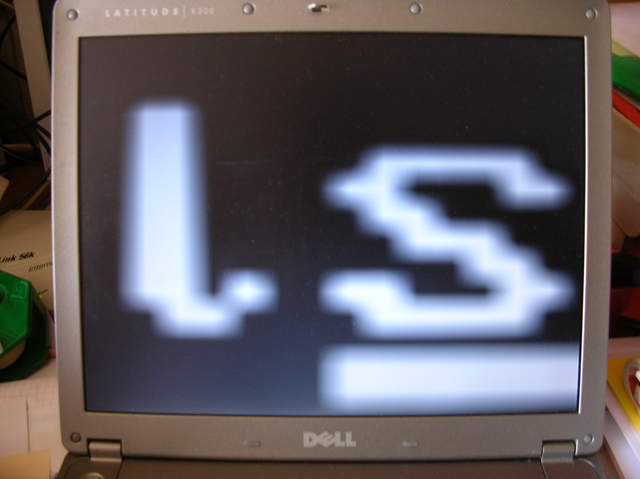
Here is a patch to correct that.  It corrects the disp_end and offset
registers of the vga board on console resize and console switch.

On usual screens, you then correctly get a right and/or bottom blank
margin.  On some laptop panels, the output is resized so that text actually
gets magnified, which can be great for some people (see
http://dept-info.labri.fr/~thibault/ls.jpg ).

Signed-off-by: Samuel Thibault <samuel.thibault@ens-lyon.org>
Signed-off-by: Andrew Morton <akpm@osdl.org>
Signed-off-by: Linus Torvalds <torvalds@osdl.org>
The idea of this patch is to lock both sides of a ptmx/pty pair during line
discipline changing.  This is needed to ensure that say a poll on one side of
the pty doesn't occur while the line discipline is actively being changed.
This resulted in an oops reported on lkml, see:

	http://marc.theaimsgroup.com/?l=linux-kernel&m=111342171410005&w=2

A 'hacky' approach was previously implmemented which served to eliminate the
poll vs.  line discipline changing race.  However, this patch takes a more
general approach to the issue.  The patch only adds locking on a less often
used path, the line-discipline changing path, as opposed to locking the
ptmx/pty pair on read/write/poll paths.

The patch below, takes both ldisc locks in either order b/c the locks are both
taken under the same spinlock().  I thought about locking the ptmx/pty
separately, such as master always first but that introduces a 3 way deadlock.
For example, process 1 does a blocking read on the slave side.  Then, process
2 does an ldisc change on the slave side, which acquires the master ldisc lock
but not the slave's.  Finally, process 3 does a write which blocks on the
process 2's ldisc reference.

This patch does introduce some changes in semantics.  For example, a line
discipline change on side 'a' of a ptmx/pty pair, will now wait for a
read/write to complete on the other side, or side 'b'.  The current behavior
is to simply wait for any read/writes on only side 'a', not both sides 'a' and
'b'.  I think this behavior makes sense, but I wanted to point it out.

I've tested the patch with a bunch of read/write/poll while changing the line
discipline out from underneath.

This patch obviates the need for the above "hide the problem" patch.

Signed-off-by: Jason Baron <jbaron@redhat.com>
Signed-off-by: Andrew Morton <akpm@osdl.org>
Signed-off-by: Linus Torvalds <torvalds@osdl.org>
Support for the new RBHMA4500 eval board for the TX4938.  General update
from the 8250 ancestor of this driver.  Replace use of deprecated
interfaces.

Signed-off-by: Ralf Baechle <ralf@linux-mips.org>
Signed-off-by: Atsushi Nemoto <anemo@mba.ocn.ne.jp>
Acked-by: Russell King <rmk@arm.linux.org.uk>
Signed-off-by: Andrew Morton <akpm@osdl.org>
Signed-off-by: Linus Torvalds <torvalds@osdl.org>
This fixes a bug in the environment variables for all PCI device hotplug calls.

Thanks to Kay Sievers for pointing out the problem.

Signed-off-by: Greg Kroah-Hartman <gregkh@suse.de>
This makes ACPI_BLACKLIST_YEAR be consistently defined when ACPI is
enabled, regardless of whether we're on x86 or not, and thus avoids
bogus -Wundef warnings on ia64.

Signed-off-by: Linus Torvalds <torvalds@osdl.org>
Removed gratuitous includes of asm/serial.h in synklinkmp and ip2main.
Allows to remove the rest of "broken on sparc32" in drivers/char - this
stuff doesn't break the build anymore.  Since it got zero testing, it almost
certainly won't work there, though...

Signed-off-by: Al Viro <viro@zeniv.linux.org.uk>
Acked-by: Russell King <rmk+kernel@arm.linux.org.uk>
Signed-off-by: Linus Torvalds <torvalds@osdl.org>
Previous INTx cleanup patch had a bug that was not caught.  I found
this last night during testing and can confirm that it is now 100%
working.

Signed-off-by: Brett Russ <russb@emc.com>
Signed-off-by: Greg Kroah-Hartman <gregkh@suse.de>
Acked-by: Jeff Garzik <jgarzik@pobox.com>
Signed-off-by: Linus Torvalds <torvalds@osdl.org>
From: 	Alan Stern <stern@rowland.harvard.edu>

This patch (as559b) adds a new routine, scsi_unprep_request, which
gets called every place a request is requeued.  (That includes
scsi_queue_insert as well as scsi_requeue_command.)  It also changes
scsi_kill_requests to make it call __scsi_done with result equal to
DID_NO_CONNECT << 16.  (I'm not sure if it's necessary to call
scsi_init_cmd_errh here; maybe you can check on that.)  Finally, the
patch changes the return value from scsi_end_request, to avoid
returning a stale pointer in the case where the request was requeued.
Fortunately the return value is used in only place, and the change
actually simplified it.

Signed-off-by: Alan Stern <stern@rowland.harvard.edu>

Rejections fixed up and
Signed-off-by: James Bottomley <James.Bottomley@SteelEye.com>
If a filesystem, while writing out data, decides that it is good
to issue a cache flush on a SCSI drive (or other 'sd' device), it will
call blkdev_issue_flush which calls ->issue_flush_fn which is
scsi_issue_flush_fn.
This calls sd_issue_flush which calls sd_sync_cache, which calls
scsi_execute_request.
This will (as sshdr != NULL) call
    kmalloc(SCSI_SENSE_BUFFERSIZE, GFP_KERNEL)

If memory is tight, the presence of GFP_KERNEL may cause write
requests to be sent to some filesystem to free up memory, however if
that filesystem is waiting for the issue_flush_fn to complete, you
could get a deadlock.

I wonder if it might be more appropriate to use GFP_NOIO as in the
following patch.

I wonder if it might be even more appropriate to cope better with a
kmalloc failure, especially as in this use, sd_sync_cache only will
use the sense information to print out a more informative error
message.

Signed-off-by: Neil Brown <neilb@suse.de>
Signed-off-by: James Bottomley <James.Bottomley@SteelEye.com>
This patch (as544) adds a private entry point to scsi_remove_device, for
use when callers already own the scan_mutex.  The appropriate callers are
modified to use the new entry point.

Signed-off-by: Alan Stern <stern@rowland.harvard.edu>
Signed-off-by: James Bottomley <James.Bottomley@SteelEye.com>